What if reaching the base of the world’s tallest mountain felt less like a grueling expedition and more like coming home? You’ve likely spent months staring at photos of the Himalayas, feeling a mix of pure excitement and that nagging knot of anxiety. It’s completely normal to worry about the thin air of the Khumbu, the unpredictability of Lukla flights, or the complex web of permits required for an everest base camp trek. You want the adventure of a lifetime, but you shouldn’t have to sacrifice your safety or comfort to find it.
We believe the secret to the summit isn’t just physical grit; it’s the warmth of local hospitality and a pace designed for your body to thrive. This guide shows you how to transform a daunting trek into a life-changing journey where every detail is handled with meticulous care. You’ll learn about the 2026 permit requirements, the reality of the Ramechhap flight reroute, and how to navigate the high altitude without fear. We’re going to preview the path from Lukla to Gorakshep, ensuring you feel the thrill of the trail while maintaining total peace of mind.
Key Takeaways
- Identify the ideal 2026 trekking seasons to ensure you catch the clearest views of the Khumbu Icefall and surrounding peaks.
- Master the updated 2026 permit system to navigate checkpoints smoothly and avoid common logistical headaches on your journey.
- Discover why the everest base camp trek is more achievable when you embrace a “Blissful Pace” that prioritizes your health and comfort.
- Learn how heart-centered stewardship and professional safety protocols turn a daunting climb into a secure, family-like adventure.
Why the Everest Base Camp Trek is the World’s Greatest Adventure
Imagine standing at the foot of the world’s highest peak, surrounded by a cathedral of ice and rock that stretches toward the heavens. The everest base camp trek is a legendary high-altitude pilgrimage to the South EBC in Nepal, sitting at an impressive 5,364 meters. In 2026, this journey remains the gold standard for adventure seekers because it offers something modern life simply cannot: a complete reset. It’s about moving from the digital chaos of your daily routine into a world of Himalayan simplicity, where the only thing that matters is your next step and the breathtaking beauty of the trail.
The scale of this adventure is truly unmatched. You aren’t just walking; you’re tracing the footsteps of history’s greatest mountaineers. While the peaks are massive, the experience is deeply personal. We’ve seen hundreds of trekkers arrive with heavy hearts or busy minds and leave with a profound sense of clarity. You don’t need to be an elite athlete to find this magic. With the right support and a heart-centered approach to pacing, this “daunting” feat becomes an achievable series of beautiful moments.
The Call of the Khumbu Region
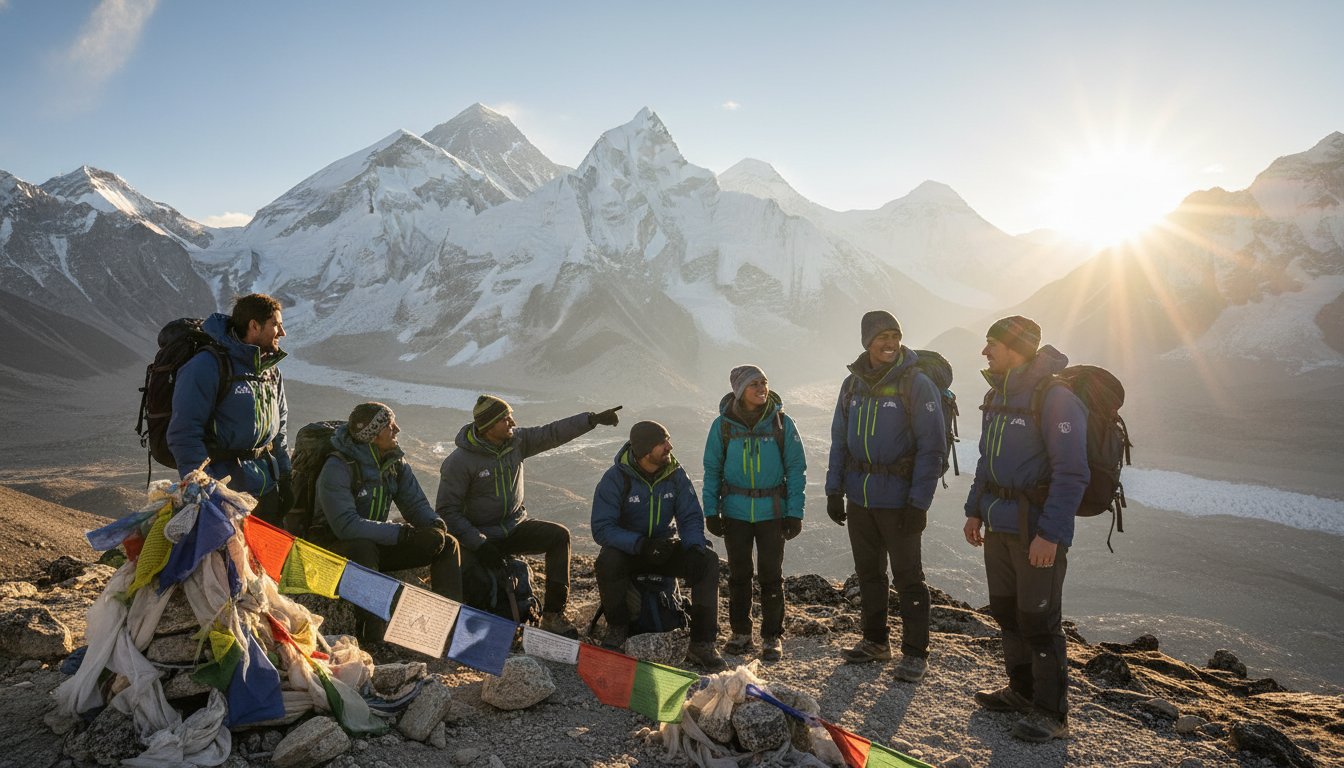
The Khumbu is a place of deep spiritual power and rugged natural wonder. Nestled within the Sagarmatha National Park, the geography shifts from lush rhododendron forests to stark, lunar-like landscapes. It’s a sensory feast. You’ll wake to the crisp mountain air, smell the sweet, earthy scent of burning juniper, and listen to the rhythmic clanging of yak bells echoing through the valleys. This is the ancestral home of the Sherpa people, and their hospitality is the heartbeat of the region. Every mani stone and colorful prayer flag along the way tells a story of devotion and resilience that will stay with you long after you return home.
Is the Everest Base Camp Trek Right for You?
Many people worry that they aren’t “tough” enough for the Himalayas. While you should be in good health, the secret to a successful everest base camp trek is mental grit rather than Olympic-level fitness. It’s about your willingness to take things slow and enjoy the journey. We’ve welcomed trekkers of all ages, from vibrant teenagers to spirited retirees. If you can walk for five to six hours a day with a light pack and a smile on your face, you’re ready. Success comes when you stop viewing the trek as a race and start seeing it as a collection of small, rewarding daily goals. Your focus shouldn’t be on the finish line, but on the cup of warm tea waiting for you at the next village.
The Khumbu Journey: Decoding the Route, Altitude, and Culture
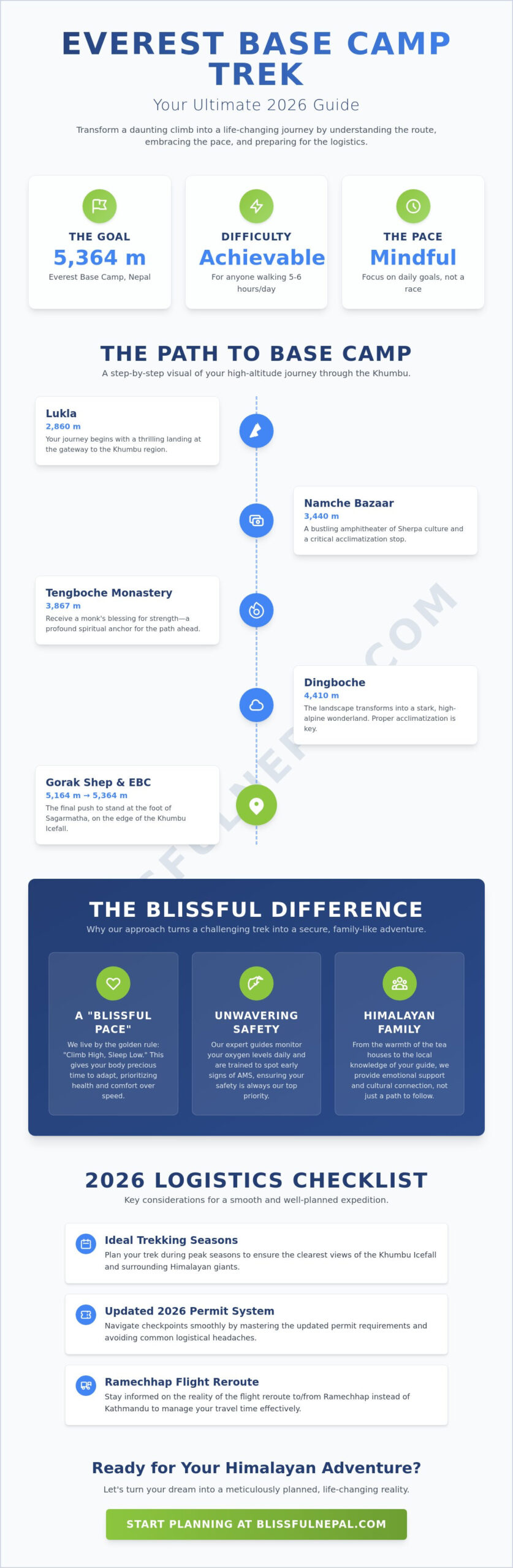
Your journey into the clouds begins with a thrilling landing at the Lukla airstrip, the gateway to an ancient world. From here, the trail winds through the heart of Sagarmatha National Park, a landscape of such immense beauty and cultural value that it’s recognized as a global treasure. As you embark on your everest base camp trek, you’ll pass through vibrant forests and cross suspension bridges draped in prayer flags. Each step brings you closer to the giants of the world, but the magic lies in the stops along the way.
Reaching Namche Bazaar at 3,440 meters is your first major milestone. It’s a bustling amphitheater of Sherpa culture where the smell of fresh pastries mixes with the mountain air. Further up, you’ll reach Dingboche at 4,410 meters. This is where the landscape transforms into a stark, high-alpine wonderland. Before the final push, a visit to the Tengboche Monastery offers a moment of profound peace. Receiving a monk’s blessing here isn’t just a tradition; it’s a spiritual anchor that gives you the strength for the rocky path to Gorak Shep and the edge of the Khumbu Icefall.
Understanding Altitude and Your Body
The thin air of the Himalayas is nothing to fear, but it’s something you must understand. We live by the golden rule: “climb high, sleep low.” This means we spend our days exploring higher elevations but return to a lower altitude to rest. It gives your body the precious time it needs to create more red blood cells. Altitude is a guest you must respect, not a rival you must race. Our guides are trained to spot early signs of AMS, like a nagging headache or loss of appetite, long before they become a problem. We monitor your oxygen levels daily to ensure your safety remains our top priority.
Sherpa Hospitality: The Heartbeat of the Trek
What truly sets this experience apart is the warmth of the tea houses. These aren’t just lodges; they’re homes where you’ll gather around a crackling stove to share stories over steaming plates of dal bhat. Your guide is far more than a pathfinder. They are your Himalayan family, dedicated to your emotional well-being as much as your physical progress. This deep local connection transforms the everest base camp trek from a simple hike into a felt experience of belonging. If you’re ready to be part of our family, our Everest Base Camp Trek itinerary is designed to keep you safe and smiling every step of the way.
Itinerary Strategy: Balancing Challenge with Proper Acclimatization
Planning your route through the Himalayas is like composing a masterpiece; every note must be in the right place for the final performance to shine. Many trekkers are tempted by 12-day “express” itineraries that promise a quick journey to the top. This is often a trap for beginners. Rushing the everest base camp trek doesn’t just make the journey harder; it significantly increases the risk of your body rejecting the altitude. We advocate for what we call the “Blissful Pace.” This strategy prioritizes your health by building in extra time where your body needs it most. Speed is a thief. It steals your joy and your chance to truly connect with the landscape.
Our philosophy focuses on two nights in Namche Bazaar and two nights in Dingboche. These aren’t just rest days. They are active acclimatization days where we explore local ridges, gain a little height, and then return to sleep at a lower elevation. While the standard route is a classic for a reason, some adventurers choose the Gokyo Lakes detour for its turquoise waters and quieter trails. No matter which path you choose, you shouldn’t miss the hike up Kala Patthar. This side trip offers the most iconic view of Everest’s summit, a sight that makes every slow, deliberate step worth the effort.
The 14-Day Gold Standard Breakdown
The transition from the lush, green forests of the lower Khumbu to the stark alpine deserts of the high mountains is a visual feast. A 14-day itinerary allows this transition to feel natural. Spending that second day in Namche lets you visit the local museum or hike to the Everest View Hotel without feeling drained. By the time you reach the higher altitudes, you’re not just surviving; you’re thriving. The return journey is equally important. As you descend, the air grows thicker and your energy returns, providing the perfect space for deep reflection on the monumental feat you’ve just achieved.
Acclimatization vs. Speed: What the Data Says
Success isn’t about how fast you climb, but how well you adapt. Local observations and trekking data consistently show that 14-day itineraries have much higher completion rates than 10 or 12-day versions. This is because a gradual ascent allows your oxygen saturation levels to remain stable. When you rush, those levels can drop sharply, leading to fatigue or AMS. We refuse to rush the mountain experience because we value your safety above all else. A slow ascent is a professional stewardship of your health, ensuring you reach the base of the world’s tallest peak with a smile on your face and wonder in your heart.
2026 Logistics Guide: Permits, Gear, and Peak Timing
Navigating the logistics of a high-altitude expedition can feel like a mountain of its own. In 2026, timing your everest base camp trek is all about choosing between two magical windows. The pre-monsoon season from March to May offers blooming rhododendrons and the excitement of the main climbing season. If you prefer crisp, crystal-clear skies and sharp mountain silhouettes, the post-monsoon window from September to November is your best bet. Both seasons are spectacular, but they require a bit of savvy planning to handle the crowds and the weather.
One of the biggest shifts for 2026 is how we get you to the trail. During the busiest months, flights to Lukla are frequently rerouted from Kathmandu to the Manthali airport in Ramechhap. It’s about a four to five-hour drive from the capital, but it ensures more reliable flight windows and less time waiting in terminals. We see this as just another part of the story, a chance to see the rolling hills of Nepal before you touch down in the high Khumbu. It’s all about staying flexible and keeping your eyes on the prize.
Permits and Paperwork Made Easy
The permit landscape has changed, and we’re here to make it simple. For your 2026 journey, you’ll need two main documents: the Sagarmatha National Park Entry Permit, which costs NPR 3,000, and the Khumbu Pasang Lhamu Rural Municipality Permit at NPR 2,000. You might have heard about the TIMS card, but that’s no longer required for this specific route. We handle all these administrative hurdles for you, so you don’t have to spend your first day in Nepal chasing stamps. Just remember that your travel insurance must specifically cover high-altitude trekking and emergency helicopter evacuation up to 6,000 meters. It’s the ultimate safety net for your peace of mind.
Packing for the Himalayas: The Layering System
Success in the mountains starts with your feet. Your boots should be your best friends, meaning they must be well broken-in long before you land in Lukla. For your clothing, think in layers. A moisture-wicking base layer keeps you dry, a warm fleece or “puffy” mid-layer traps heat, and a high-quality down jacket serves as your shield against sub-zero nights. Don’t forget the small things that make a tea house feel like home, like a favorite book or a stash of your favorite tea bags. If you’re ready to leave the paperwork to us and focus on the views, you can book your Everest Base Camp Trek today and let us handle the rest.
Trekking with Blissful Nepal: Beyond a Guide, a Himalayan Family
Choosing who to walk with is the most important decision you’ll make for your journey. We don’t see ourselves as just a trekking agency; we’re your Himalayan family. Our “Guest First” philosophy means every decision is rooted in your comfort and your unique story. From the moment you land in Kathmandu, you aren’t just a client on a list. You’re a guest in our home. This heart-centered approach transforms the everest base camp trek into a felt experience of hospitality where you’re supported by professional stewardship every step of the way.
Safety is the foundation of our care. We don’t just hope for the best; we prepare for every scenario with meticulous attention. Our guides carry pulse oximeters to monitor your oxygen saturation daily, ensuring your body is adapting beautifully to the thinning air. We have emergency oxygen supplies ready if the altitude becomes a challenge, and our 24/7 support network means you’re never alone in the Khumbu. We also believe in leaving the mountains better than we found them. This means paying our porters fair wages and choosing eco-friendly tea houses that respect the local environment. When you trek with us, your adventure supports the very communities that make this region so special.
Why Our Guides are Different
Our guides are the soul of your experience. They’ve spent years building deep, personal relationships with tea house owners across the trail. This means you get the best seat by the stove and the warmest welcome in every village. We love the “Family Table” experience. It’s that magical hour after sunset when we all gather to share a home-cooked meal and laugh about the day’s challenges. Our guides are masters of personalized care. If the group needs to slow down, we slow down. We adapt our pace to the slowest member because the goal isn’t just to arrive; it’s to arrive together, safely and with a sense of total wonder.
Your 2026 Everest Adventure Starts Here
Ready to turn your mountain dreams into a reality? We’ve made the booking process as smooth as a descent into Namche. It starts with a simple, personal conversation. We host pre-trek preparation calls to answer every question about gear, training, and what to expect on the trail. We want you to feel total confidence before you even pack your bags. Join our family and discover the magic of the Himalayas through the eyes of those who love it most. It’s time to make memories that will last a lifetime. View our 2026 Everest Base Camp Trek Packages and let’s start planning your everest base camp trek today.
Step Into the Shadow of Giants
Reaching the base of the world’s highest peak is an achievement that stays with you forever. We’ve explored how the right 2026 permits, a deliberate 14-day pace, and the warmth of Sherpa culture turn a challenging climb into a joyful pilgrimage. You don’t have to navigate the thin air alone or worry about the complexities of Ramechhap flight diversions. Success on an everest base camp trek is about choosing a team that treats you like family while providing the professional safety you deserve.
Our local guides bring over 10 years of Khumbu expertise to every trail, maintaining a 98% success rate through superior acclimatization pacing. We carry a comprehensive safety kit, including emergency oxygen and satellite communications, so you can focus entirely on the awe-inspiring views. It’s time to move beyond the photos and feel the mountain air for yourself. Join our next Everest Base Camp expedition and experience Himalayan hospitality. The mountains are calling, and we can’t wait to welcome you home to the Himalayas.
Common Questions About the Journey
What is the best month for the Everest Base Camp trek in 2026?
The best months are April and May for blooming rhododendrons, or October and November for the clearest mountain views. These windows offer the most stable weather and comfortable daytime temperatures for walking. While the trails are busier during these peak times, the vibrant energy and shared camaraderie make it a wonderful time to visit.
How much does an Everest Base Camp trek package cost?
The price of a package depends on your chosen duration, the level of comfort in tea houses, and whether you include additional side trips. Most standard guided treks cover your permits, domestic transport, and professional guide services. We recommend checking current offerings directly to see which inclusions best fit your personal adventure goals and budget.
Do I need technical climbing skills for the EBC trek?
You don’t need any technical climbing skills or mountaineering experience to reach Base Camp. This is a high-altitude hike on established trails, not a vertical climb requiring ropes or ice axes. If you can walk for several hours a day on uneven terrain, you have the physical foundation needed for success.
Is there Wi-Fi and electricity available at Everest Base Camp?
Electricity and Wi-Fi are available in most tea houses along the trail, though they often come with a small additional fee. You can charge your cameras and phones in communal areas, and local networks provide internet access even in remote villages. It’s a great way to share your photos with loved ones back home.
What happens if I get altitude sickness during the trek?
Your safety is always the priority. If you show signs of altitude sickness, your guide will immediately assess your condition and begin a descent to a lower elevation. We carry emergency oxygen and maintain constant communication with medical support to ensure every guest is cared for with the utmost professional stewardship.
How difficult is the flight to Lukla?
The flight to Lukla is a short, breathtaking 30 to 40 minute journey that serves as the exciting start to your adventure. While the airstrip is famous for its mountain location, pilots are highly experienced and flights only depart in clear weather. During peak seasons, flights are frequently rerouted to Manthali, which is a 4 to 5 hour drive from Kathmandu.
What kind of food will I eat during the trek?
You’ll enjoy a variety of hearty, home-cooked meals including the famous “Dal Bhat,” which is a nutritious combination of rice, lentil soup, and vegetables. Tea houses also serve familiar favorites like pasta, eggs, porridge, and even pancakes. It’s the perfect fuel to keep your energy high for the everest base camp trek.
Can I do the Everest Base Camp trek solo or do I need a guide?
While some experienced hikers go solo, we strongly recommend trekking with a guide for your safety and cultural enrichment. A guide handles all the logistical hurdles and acts as a bridge to the local Sherpa communities. Having a “Himalayan Family” by your side ensures you can focus entirely on the wonder of the everest base camp trek.